
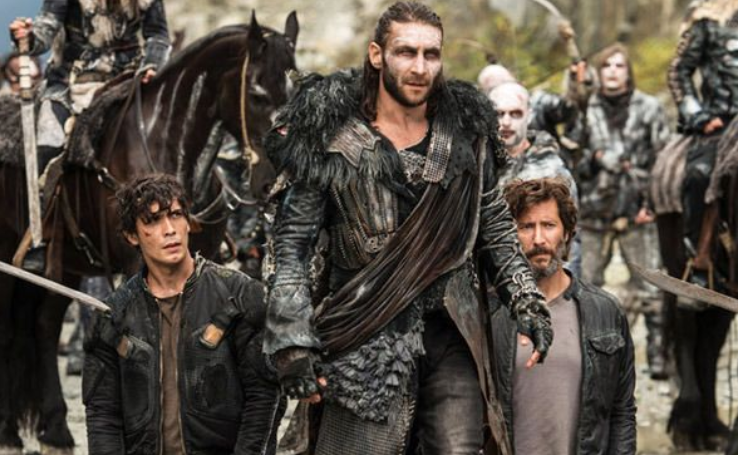
The early episodes mostly focused on young survivors learning how to live on Earth again. Later episodes introduced a completely different culture living outside the crashed groups. Many viewers began noticing how the grounder in The 100 represented a structured society with rules, language traditions, and leadership systems. The introduction of this group shifted the show from simple survival drama into something closer to political conflict. The writing started showing alliances, rivalries, and negotiations instead of only wilderness survival.
Tribal leadership and organized authority structures
Several characters eventually held an important role on The 100 because they represented leadership within the tribal system. The Grounder society followed a strict command structure where leaders controlled armies and negotiated with outsiders. This hierarchy created tension when outside groups attempted to communicate with them. The presence of strong commanders made the political environment more complicated than viewers initially expected during the early seasons.
Language and cultural traditions shaping identity
Another interesting element involving the grounder in The 100 involved the constructed language known as Trigedasleng. The show did not present the language as a random invention. Writers designed it carefully to reflect the cultural history of people who survived long after the original apocalypse. Language helped separate tribal communities from the newer arrivals on Earth. It also added realism because societies usually develop unique speech patterns over long periods of isolation.
Conflict between survival strategies
Not every group in the story approached survival in the same way. Some characters adopted negotiation tactics, while others relied on military strength. Several tribal leaders eventually played an important role on The 100 because their decisions affected entire communities. These leaders often had to choose between war and diplomacy when dealing with unfamiliar outsiders arriving on their territory.
Military organization inside the tribal groups
The warriors within the tribes operated with strict discipline and loyalty. A typical grounder in The 100 followed the authority of commanders and respected the warrior code guiding their behavior. These warriors trained from a young age to defend territory and maintain tribal order. Their structure resembled organized armies rather than scattered survival groups.
The influence of commanders on political balance
Commanders were not just military leaders but also symbolic figures within the tribal belief system. Several individuals with an important role on The 100 carried the responsibility of representing tradition as well as authority. Decisions made by commanders often influenced multiple tribes simultaneously. That level of influence increased tension during negotiations with other groups.

Traditions surrounding leadership selection
Leadership in the tribes was not emergent. Cultural practices informed the manner in which new leadership would come and the manner in which leaders would change hands. When the viewers talk about how a grounder plays his role in The 100, they usually refer to the ritual aspect relating to the change of leadership. Such practices promoted the notion that leadership was not power-based but cultural continuity.
Interaction with outside communities
The arrival of new survivors created a complex situation for tribal communities. A grounder in The 100 sometimes viewed outsiders as potential threats, while others considered possible alliances. These interactions shaped the overall direction of the story. Cooperation occasionally emerged, though distrust remained present throughout many negotiations.
Strategic alliances are changing the storyline
Over time, several alliances developed between tribal groups and other survivors. Such agreements usually entailed leaders who played an important role in The 100 since they represented larger communities at the negotiation table. Alliances had limited lifespans, but once they came, they shifted the balance of power. One of the major themes that motivated the series is political strategy.
Cultural resilience after the apocalypse
Many viewers were interested in the fact that the tribal culture survived so long after the catastrophe that happened. The 100-grounder was a normal type of person who was more of a resilient person than just an aggressive one. The destruction of the previous civilization did not stop their communities from restoring the social systems, language, customs, and belief systems. That strength provided richness to the world-building within the series.
Conclusion
The 100 often had characters in an important role whose choices determined the course of whole seasons as they affected alliances and conflicts and survival tactics. The 100 also had a grounder to broaden the world of the show beyond a group of survivors wandering around a post-apocalyptic planet. Political complexity that was brought with tribal leadership, cultural customs, and organized systems of warriors transformed the way the story was interpreted by the viewers. The story slowly dealt with diplomacy, power, and culture instead of only focusing on survival. These factors contributed to the production of the strata of the fictional universe in which various communities found it hard to live together in severe circumstances.